AI agents don't work reproducibly if you don't tell them to
AI coding agents like Claude Code, Codex, and OpenCode are amazing little information machines, but their use comes with some risk. You’ve surely heard of the hallucination problems, where the large language model (LLM) seems to simply make things up, but what about their use in research computations? These agents are very good at writing code and analyzing data. They’ll produce beautiful HTML artifacts filled with rich figures and tables, but do they work in a verifiable, transparent, and reproducible way, such that they could be trusted to produce scientific evidence and fully describe how they did it?
To find out, I set up a little computational experiment. Claude Code, Codex, and OpenCode were all given the same prompt to analyze and visualize a dataset, then create a short report. Each agent was run 5 times in a “sandbox” with identical conditions so it mimicked a fresh install with a new session on a new machine. Their work was evaluated based on whether or not they followed these computational reproducibility best practices:
- Use version control to keep a history of all file changes.
- Use an environment manager to record the exact software package versions used, i.e., save a “lock file.”
- Use a pipeline or build system that tracks (i.e., hashes) the content of input and output files.
- Define the provenance (or source) for any data imported or created by hand.
- Automatically assemble composite artifacts like papers and reports from their components (figures, tables, results), rather than copying them in by hand.
The idea is that if the agents follow these practices, it will be quick and easy to verify that the outputs were indeed produced by the inputs and process definitions (scripts, notebooks, etc.). The goal is to create something runnable that you don’t actually need to run to be able to understand how the outputs were created, which is especially important for expensive, long-running tasks like large-scale simulations. With verification made easier, we can spend more time and effort validating that the approach properly answers the research questions.
Figures 1 and 2 show the results of 5 runs for each agent, with figure 2 showing what happens when Git is installed on the machine. I’m not sure if I find this surprising, but when they weren’t asked to work reproducibly, the agents basically never did. All saved their source code with the exception of one Codex run in each set, which executed R code directly via the command line without saving it. Only one OpenCode run in each set saved an environment spec file (requirements.txt), but they didn’t include exact versions, and therefore don’t count as following practice 2. None used version control, regardless of whether or not Git was installed. Codex did the best by far at automatically assembling the report with a script instead of manually inserting the values, but didn’t do it for every run. OpenCode succeeded once out of its ten runs and Claude Code never did.
Claude Code made an interesting mistake that shows the importance of automating the propagation of results into documents. In one run, it printed an estimated value from the analysis script, but the value it copied into the report differed in the last decimal place, since it ran a one-off command to average together rounded values instead of taking the value the script calculated.
Michael Frank published a very interesting blog post recently describing the results of having Claude Code audit the reproducibility of his own papers over the past five years. Many of the numbers that didn’t reproduce were apparently typos. This suggests it’s worth it for both humans and agents to avoid manually typing in numerical results, not only because that invites typos, but because projects evolve and it’s easy to forget to update a value everywhere it’s been used.
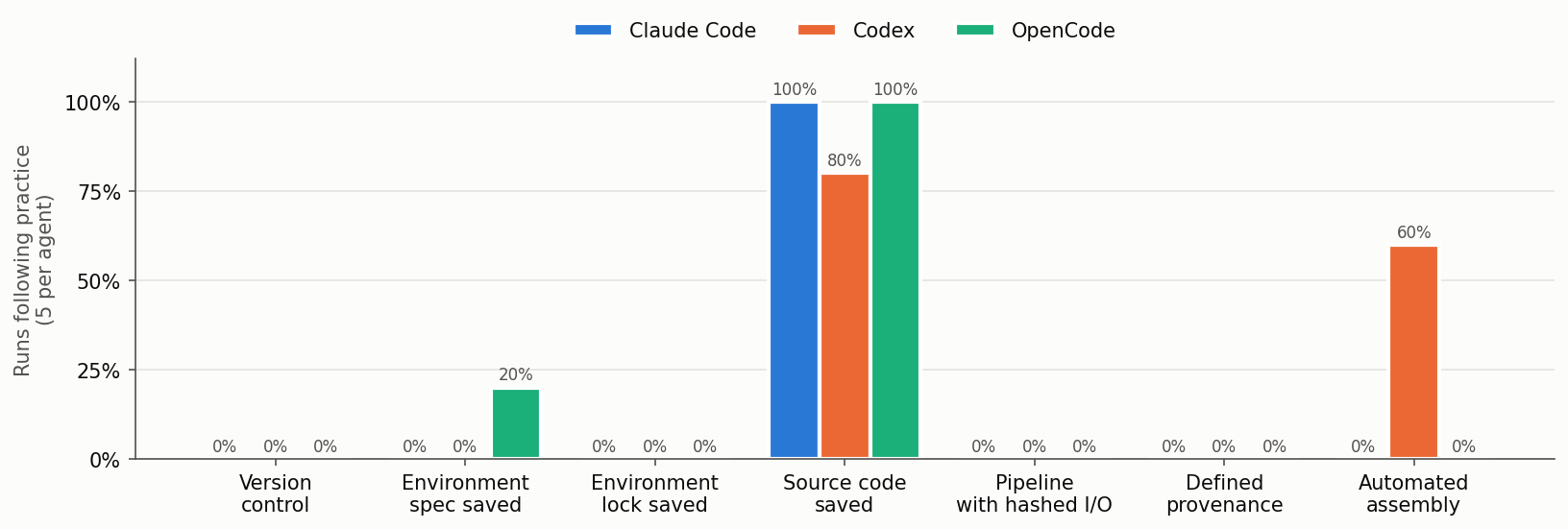 Figure 1. The fraction of runs where each agent used various practices on a machine without Git installed.
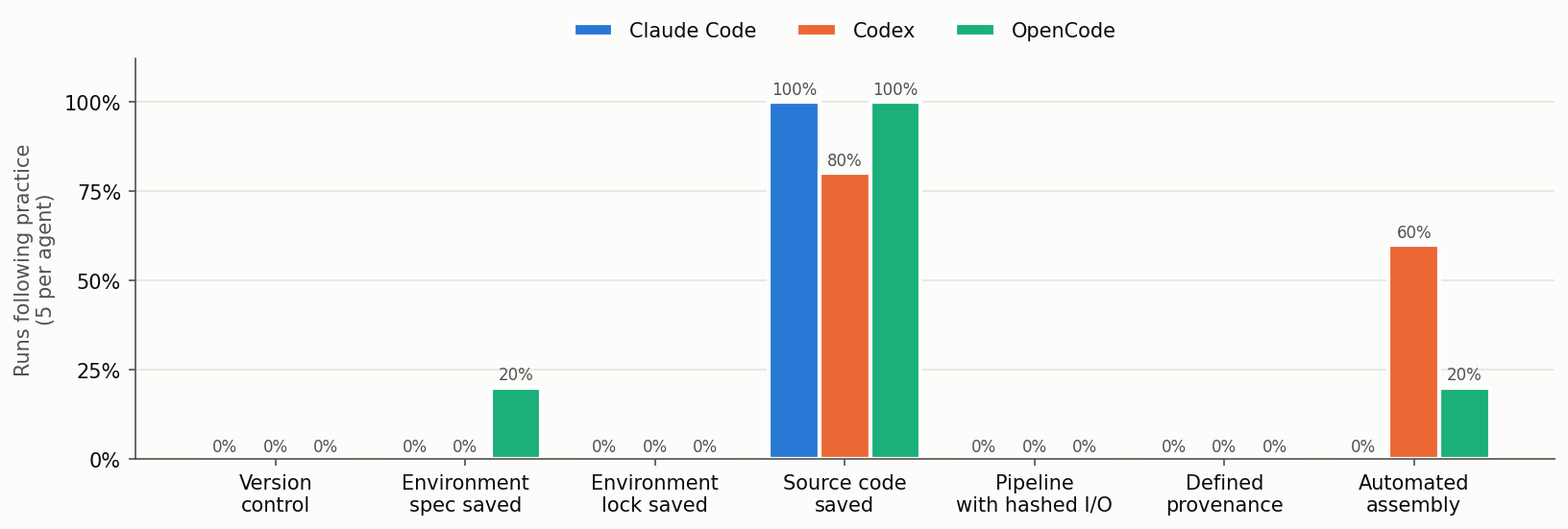 Figure 2. The same conditions as figure 1 except with Git installed.
Of course I can’t get through a post on my own website without shilling some of my free software, so I repeated the same experiment with “Use Calkit.” added to the prompt. That’s it—just two extra words and everything else left as is.
This (also maybe not surprisingly) bumped reproducibility practice rates up dramatically. All agents saved their source code and used an I/O hashing pipeline. Nearly all used good environment management practices. One interesting outlier was Codex, which never used version control in any run. OpenCode was the only agent that successfully defined the provenance of the raw data, but only in one instance. On the whole, however, OpenCode did the best, so if you’re looking for the most transparent and reproducible agent, it might be your best bet.
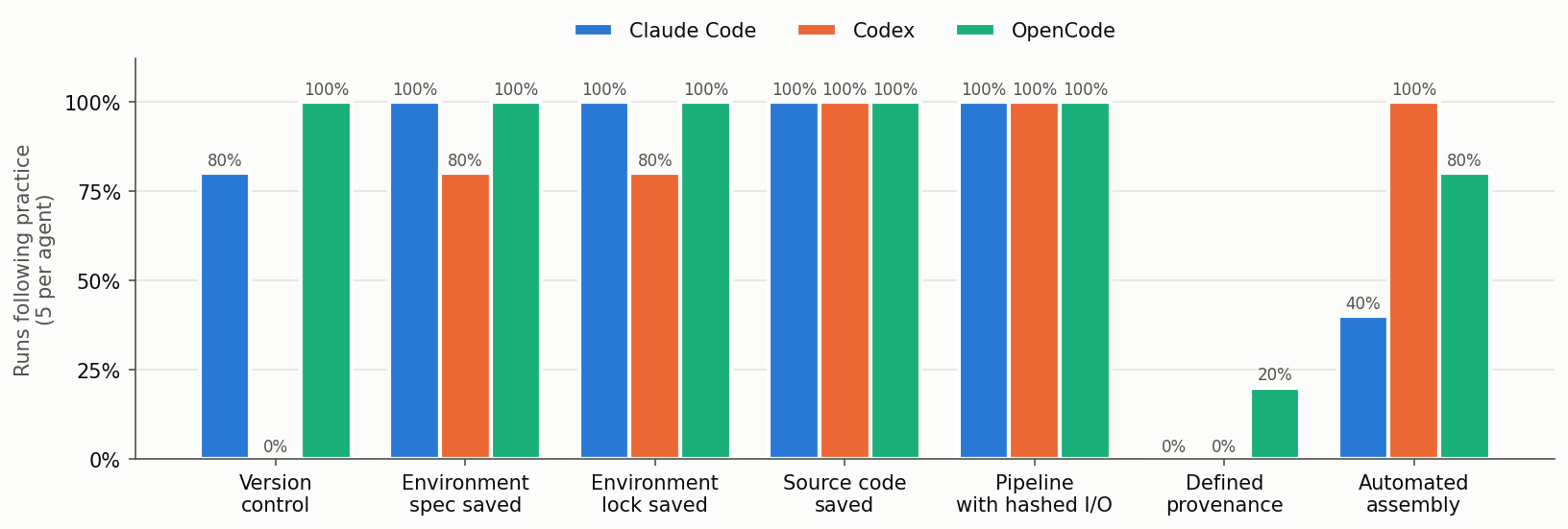 Figure 3. Agent reproducibility practice rates when told to use Calkit.
Next I ran another set of tests with the “Use Calkit.” prompt, but with Calkit’s agent skills installed. This especially helped in the automated document assembly category, but using version control and attempting to define the provenance for the raw data were still sorely lacking, and maybe even got a little worse. That’s good fodder for improvement and retesting, though the prospect of automatically testing agent skills in CI checks feels exhausting already.
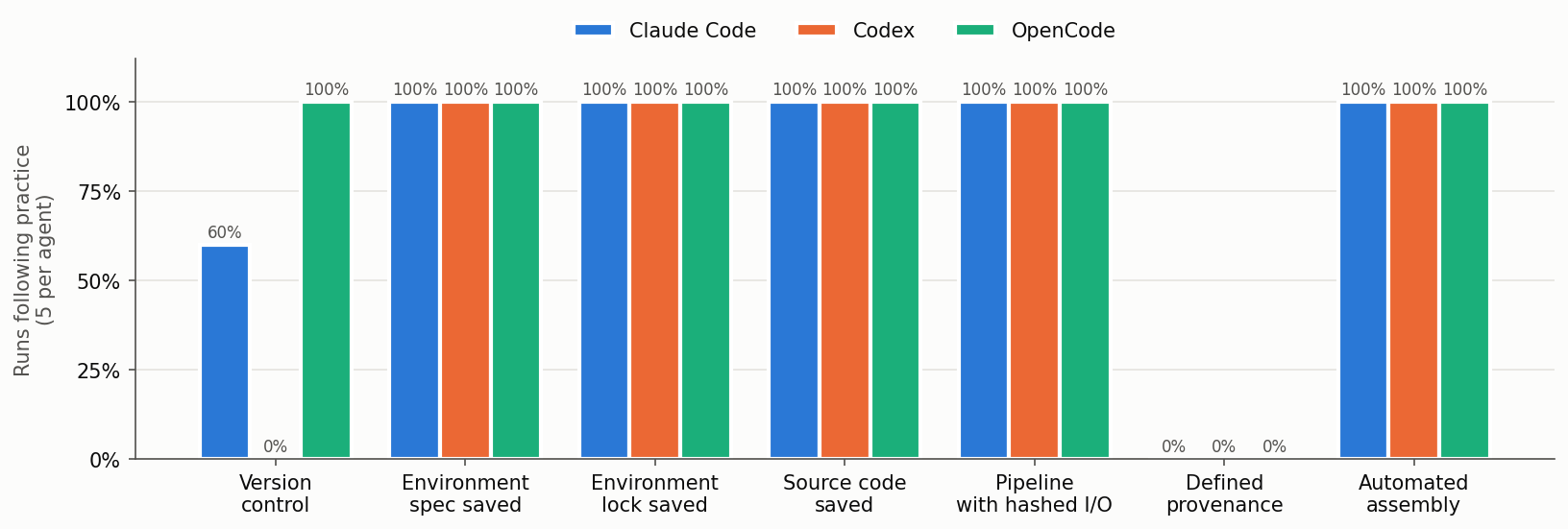 Figure 4. Agent reproducibility practice rates when told to use Calkit with its agent skills installed.
AI agents make producing research outputs so much faster. This experiment itself was put together with Claude Code, and I think it would have taken at least ten times longer if done by hand. However, the bottleneck has now shifted to verification and validation—checking that the outputs were generated as described, and that they actually back up the claims. For verification, following reproducibility best practices is crucial, because you can trace through the exact path taken to produce each output. You don’t need to simply take the agent’s word for it when it tells you how something was created.
This study was done in a
Calkit project,
which you could try to reproduce (calkit run),
though I suppose it would be more interesting
to try replicating (calkit run --force).
In any case, better reproducibility in your agentic analysis workflows
is two words away: just tell your agents to use Calkit.